#EnjoyTheRide
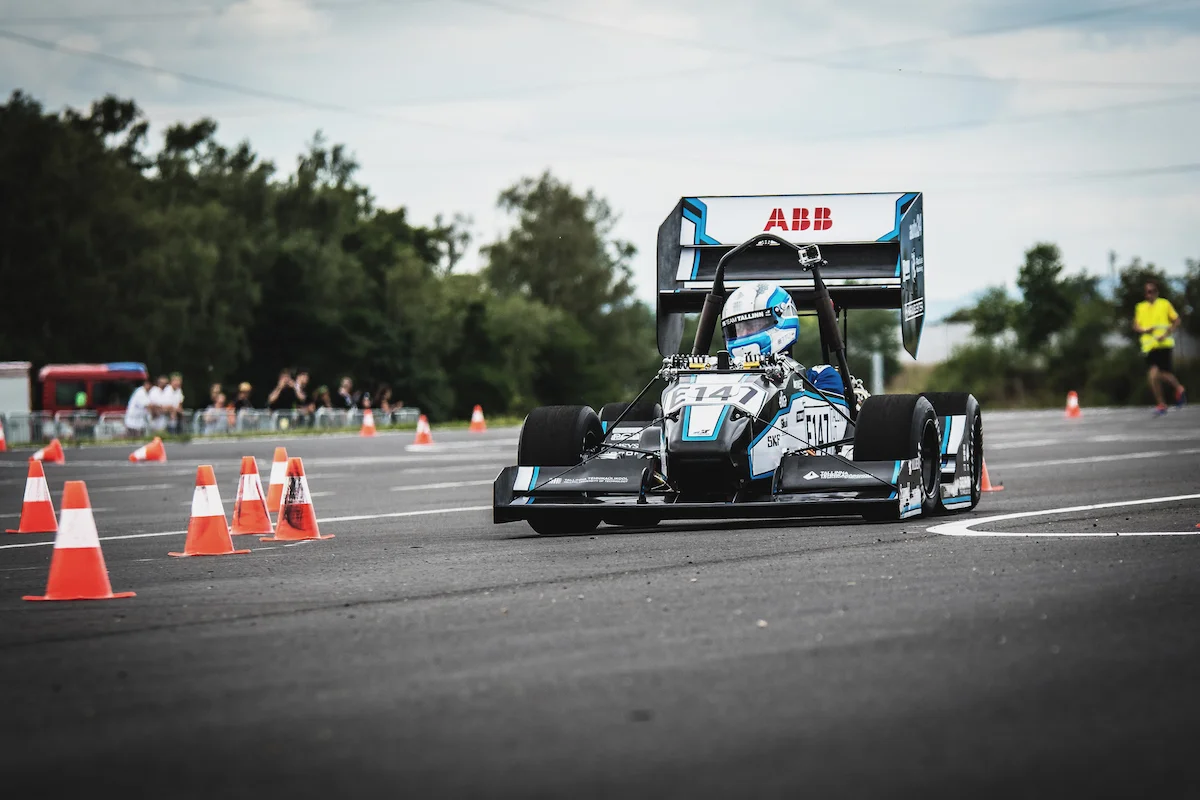
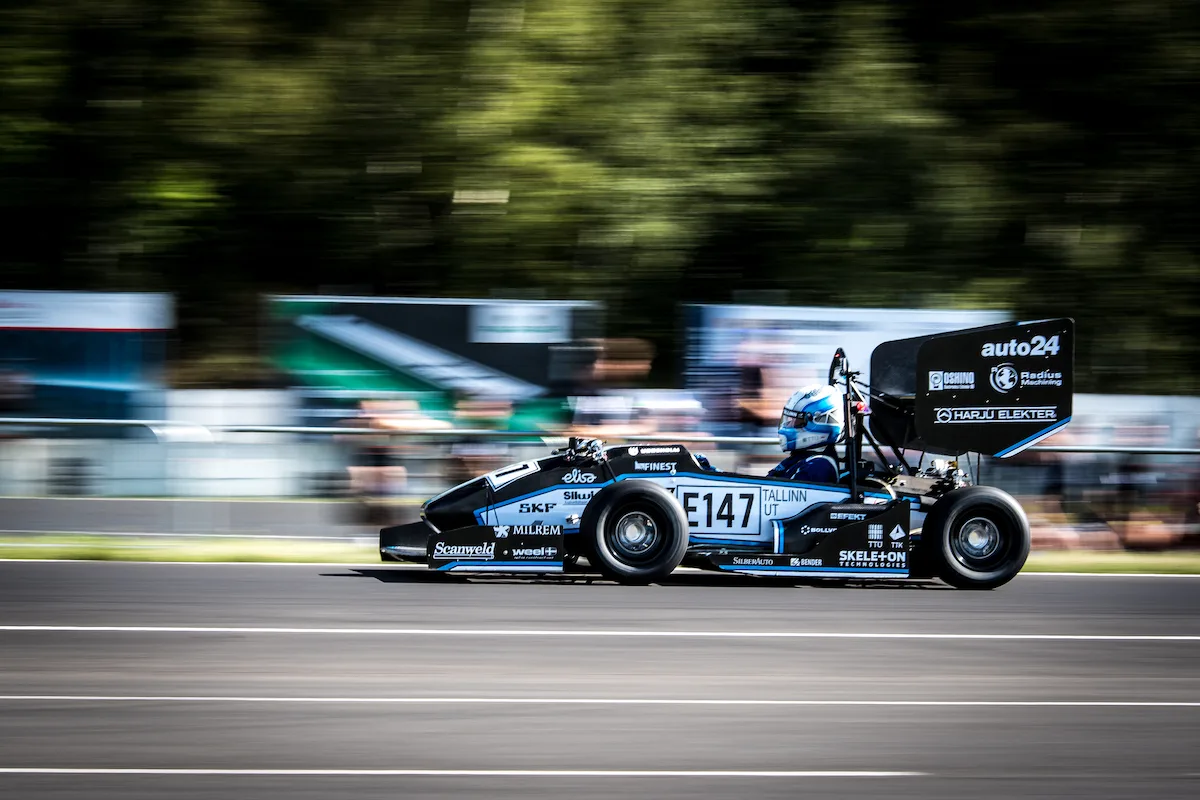
This spring marked ten years since the first student-built formula car was completed in Estonia as a joint project of Tallinn University of Technology and Tallinn University of Applied Sciences – a dignified achievement in its own way for a team that continues the formula-building traditions that began in this country in the 20th century. From the nostalgic Formula Estonia, the students have made FEST (Formula Estonia), and FEST17, completed within this year, is already the tenth of its kind. In other words, every autumn the design and building of a new car begins. The fact that the finished race machine goes through timing at official competitions for only one season is not extravagance, but a provision in the Formula SAE (student formula series) rules – each year you can compete only with that season's car. This clause, which at first glance looks like waste, is there above all so that students will make the effort and develop the next car visibly better than the previous one. It is not so much a race as a product development competition, where in determining the ranking great emphasis is placed on the students' engineering-based car building, and where the good driving and design qualities of the formula car are assessed; FEST17, built by 50 members, meets these criteria superbly. Starting the season with the largest number of young engineers in the team's history, FS Team Tallinn set as this year's goal to build the lightest and most reliable student formula car designed and built in Estonia so far. The decision taken in 2012, after the highly successful FEST12 car, to replace combustion engines with electric ones has kept the team at the world's top unsteadily – a win or two at some competitions, but an ebb immediately following. The cars have not been reliable, and sleepless garage hours have so far been celebrated even between competition stages, which leaves a strong stamp on the team's overall preparation for the static events of the competitions (e.g. the defence of the car's design). The stronger hint was clear that something about the car had to change. Ideally the competitions would be more a matter of formalising potential, not a last-minute effort to get the car to the track by the skin of its teeth: to run ahead, it can be said that the students' work in the 2016/17 season was purposeful and was rewarded accordingly at the competitions. In a student formula, efficient and fast performance of the car depends on the formula car's aerodynamics down to the smallest details, but mainly two mutually independent parameters can be highlighted: the mass of the car and the power of the motors. For the latter, the maximum threshold is reached remarkably quickly, because under the rules the maximum power of the electric motors must stay within 80 kW – to achieve this parameter our car has electric motors for each of the four wheels. As a result, faster results in racing correlate with better figures in weight savings.
And FEST17 had to come out light – so light that it would drop below the magical 200 kg mark. Surprising even ourselves, we got the mass from the previous car's 220 kg down to 187, which the more optimistic engineers did not see even in their dreams at the start of the season. All areas felt optimisation from a mass perspective: smaller dimensions, less metal and more carbon – a material that is lighter and from which we know how to laminate parts ourselves. The easiest weight saving, 3.5 kilograms, came from replacing aluminium wheels with carbon wheels, while the more complex weight figures measured in grams were reduced on various electronics components. The car's reliability did not let FEST17's engineers down even once on the competition trip in any big way – the few faults that appeared were dictated mainly by unsuitable weather, track conditions and minor accidents. The more fault-free working hours come from the long and thorough test period, of which the newest formula car had far more than its older brothers. A large part of the analysis was carried out in computer programs instead of physical tests. For example, for the team's aerodynamics engineer a 5000-hour software licence set aside for analysis in the field ran out in 11 months, which works out to an average computer working time of 62% of the day – admittedly, the student does not have to spend all of that time at the computer personally. Regardless, this example superbly visualises the students' dedication to the formula car, which leads to the completion of a stable race machine. The car, which had already shown faster laps at the Rapla kart track in May and June, injected positivity and faith into the team to begin the competition season a couple of weeks earlier than in previous years. As the result of thorough discussion, Formula Student East, held near Budapest at the Euroring, was chosen as the first stage this time. A competition full of teams from the world's top ten was a perfect measuring-up to start the season, and here the handiwork of the Estonian guys already showed its teeth strongly to the top schools of engineering – the weaker spots showed up only in the static events, where a little less thinking resource was left over alongside car building.
Traditionally every competition begins with the car's technical inspection, and so it did in Hungary. As is typical of a first competition, testing the car goes hand in hand with a minor nervous breakdown – the car's brakes did not lock sufficiently to be allowed to compete. And here the team performed an engineering miracle in the two hours left before the inspection. New setup, a different driver at the wheel and finally the inspection passed: at first it seems the season's big plan of a durable car began to waver strongly. Contrary to the sceptics' opinion, an excellent time came in the formula car's figure-eight and the best time in acceleration was achieved at the very first attempt, which – admittedly – was beaten by one (but only one) German team. This proved that FEST17 is fast, certainly the fastest made by the Tallinners – the reward was second place in acceleration at the competition and a surprising third place in the overall classification of the driving events.
The first and second competition stages were separated by a week and a half, during which the team allowed itself a small holiday in Croatia as a reward. So that the side trip would also include an educational side, the team visited its great role model in the field of electric cars: the team visited the Rimac Automobili factory, offering the young engineers a big motivation package and possible future partnership. In the second half of the holiday, tests were made with the reliable FEST17 at a local kart track.
The second international measuring-up between student formula cars took place in Most, Czech Republic. Knowing the car's good pace, the team members had practised oral presentations for the competition, and from there came the first positively standing-out result in the static events – third place in the car's design defence. This was followed by the best results on the acceleration track and in the figure-eight. The first couple of competition days had gone well, and against the background of good results the team enjoyed the company of our excellent friends the Finns, in the mobile wood-fired sauna brought along to the Metropolia Motorsport camp, with obvious contentment in mind. At every competition, however, FS Team Tallinn had a minor setback in store – in the last day's endurance event one of the car's four motors stopped working and we lost valuable time. The final result was a dignified second place.
Traditionally, between the official competitions the team has taken part in one unofficial test competition – Baltic Open, in which three older FS Team Tallinn race machines also took part. The weather did not spoil the competition, and as a result of heavy rain a rubber dinghy would have been more helpful for getting round the track than a high-tech formula car. To top it off, the rim of one FEST17 wheel broke – did that end the team's competition season? Fortunately every problem had a balm, and a new rim was found within driving distance in Germany. Cheers of joy!
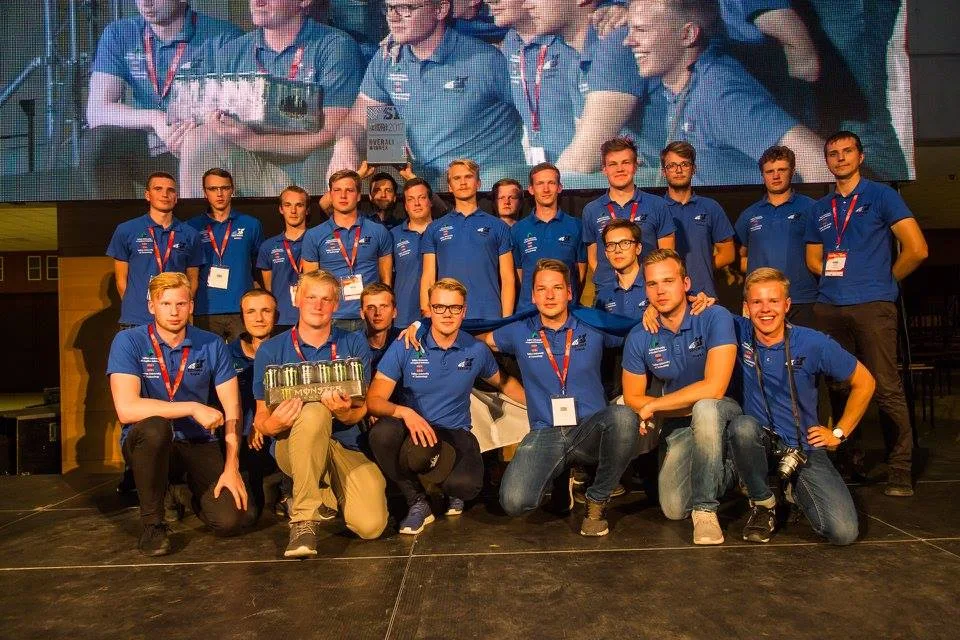
Whoever had already managed to start designing next season's formula car on the computer turned the calendar notebook back. Hungary, here we come! The last competition took place, similarly to the first, indeed in Hungary, under the name Formula Student Hungary. The measuring-up held on the university campus in downtown Győr turned out to be the team's most successful but also most melancholic competition of the season. FS Team Tallinn kept up its level in the short dynamic events, second place was achieved in the design defence, and results in the other static events also improved. Then came a shock. One of the many German student formula teams could not keep its car between the lines on the acceleration track and drove into a street post – the driver was fine, but the car was wrecked. Accidents are very rare in student formula, and for safety reasons it was decided to cancel the remaining dynamic events. This meant an automatic stage win for our students, but the competition became unofficial and the points are not counted in the rankings. A pity!
Looking back at the past season, it was certainly FS Team Tallinn's biggest development in the last five years. Big goals were met: the car has worked, with small hiccups, up to this day, and the weight win was overwhelming. The ambitious season added enthusiasm to the active team, and the design of the new formula car was begun already on the competition trip, which has never been done before. This year promises to be interesting: we are beating last year's membership record by fifteen – since September FS Team Tallinn has 65 members. As a big change, we plan to move the carbon monocoque body to the prepreg method – we will start using carbon cloth pre-impregnated with curing resin. Development opportunities can be found in many ways in the different areas: always making the car lighter and faster. Wish us a successful season!