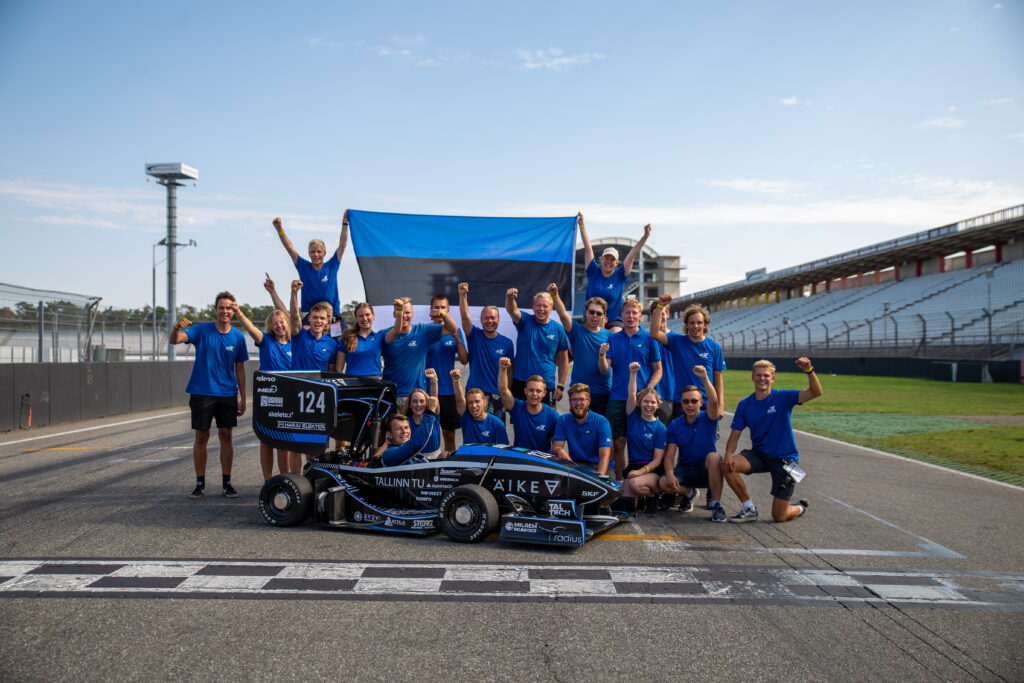
Formula Student Austria 12th place
Formula Student Austria
- Design 2nd
- Cost report 3rd
- Skidpad 6th
- Acceleration 6th
- Autocross 10th

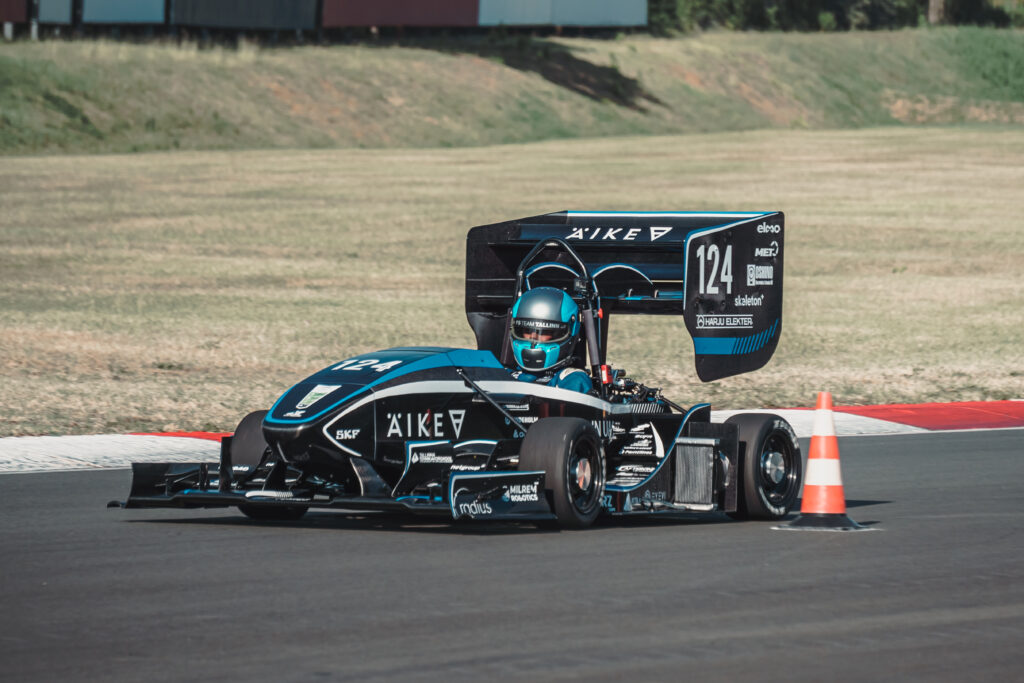
5 competitions, 50 days and more than 50 students: a test of 10 months of development work.
5 competitions, 50 days and more than 50 students: a test of 10 months of development work. This describes what awaited the student formula car before setting out on the competition trail in Europe. Late in the evening of 10 July we started the buses to head to the season's first competition. 2400 km and a day later, at about four in the morning, we arrived at the car park of the Dallara car factory to give FEST23 one last polish and get the car ready for technical inspections. At 8.30 we got into the competition area and the season's first competition could begin!
On site, tremendous heat awaited; stepping out of the team's bus it was as if there was a wall in front of us. Suddenly the temperatures were nearly 20 degrees higher than usual in Estonia. This is the first challenge for both the team and the formula car. A fair amount of preparation paid off very well, as we were one of the first teams to pass technical inspections and be allowed onto the track. The good reliability of the car that began in Estonia continued in the Central European heat, and the first events passed smoothly. Conditions on the track were good, and the team had never before seen such high longitudinal and lateral acceleration values in the log. We were very happy with the car's capability and its first test, and the biggest competitor at the competition was a German team holding sixth place in the world. Even before the endurance event we were the overall leaders, until the driver change. When Robert-Juss got behind the wheel we had to bring the pace down considerably, because in the sun the temperatures inside the monocoque rose so high that the inverter's maximum temperature was already within reach. The Germans had a special sort of “fridge” with them, in which the battery pack was cooled before going onto the track. This is not directly forbidden in your own pit, so hats off, well done. Second place for us overall! A very good result at the first competition of a car with a completely new concept. The electronics were reliable and there were not too many sleepless nights where anything fundamental had to be redone. After the competition came a well-earned day of rest by the Mediterranean, on a beach in Venice, which was halfway on the drive to Graz, Austria.
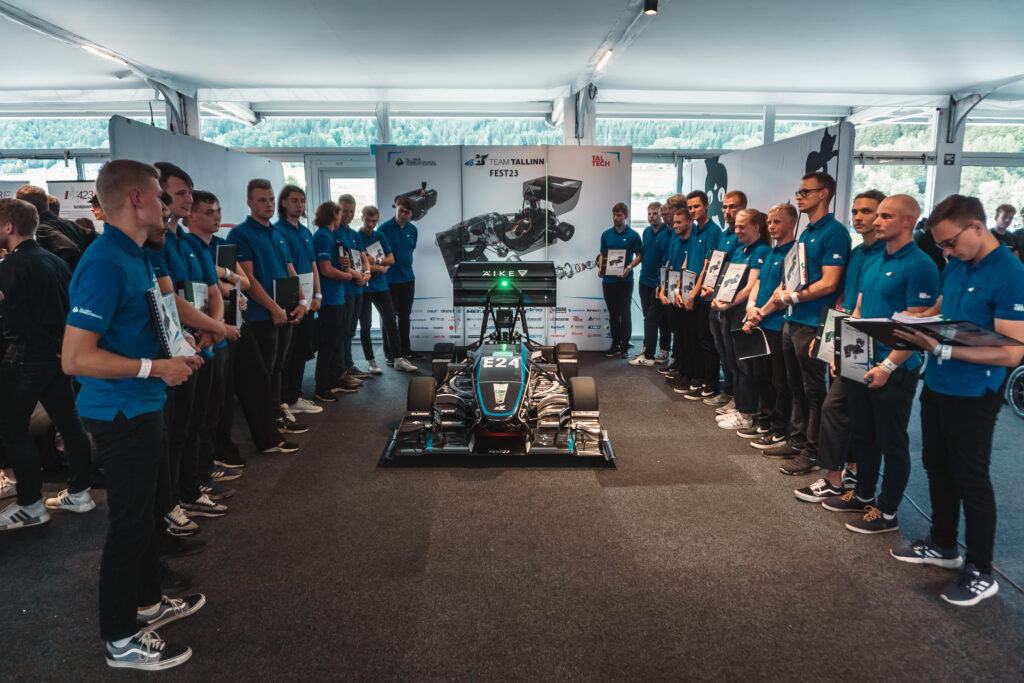
The local team agreed to host us before the FS Austria competition. We got almost a week of valuable testing and fine-tuning time. The last test day in the mountains was rainy, the downpour had just ended and it seemed a good moment to fully charge the battery pack. As soon as we had taken the battery pack out of the formula car, it started to pour cats and dogs. We protected the battery pack with umbrellas and a tent as much as possible, but moisture still got in and the measured insulation pointed to a problem. The electronics people searched for the fault around the clock, but nothing. Time was already pressing and the other teams had already passed technical inspections at the competition site, while we were still 2 hours away diagnosing the battery pack. Simply put, the relief was immense when the fault turned out to be a faulty multimeter. We packed our things and headed as fast as possible to the Red Bull Ring in Spielberg. Straight to technical inspection, and the next worry – in the opinion of the chief judge, the material of our module enclosure did not have the fire resistance required. Despite a long argument, citing the rules and explaining, the judge still stuck to his position and did not let us through the inspection. We weighed different options, but making a new module enclosure in such a short time would not have been possible. A solution had to be found with the existing materials, and quickly. We found that if, instead of the module's 2 mm wall, we took two 3 mm thick pieces of enclosure and dipped a suitable amount of water between them, the material is fire-resistant enough on video and extinguishes by itself. Quite sceptical ourselves, we went to the judges and lo and behold, he took one look and it was fine. Terribly strange men.
The remaining inspections went without problems. As there was time to spare, we could still test the last parameters in the test area. Both the static and the dynamic events were successful and a podium place overall was again on the horizon. The last and decisive event – the endurance event. FS Team Tallinn is at the start, the team is ready behind the computers watching the telemetry, the car goes onto the track, the driver drives cleanly and the car is fast. Until the moment it no longer is. The indicator light on the roll hoop reveals that the high voltage has switched off and the car is merely rolling. The endurance event was over for us. At the end of the long straight of the Austrian track there is a sharp turn, i.e. braking from top speed, which means regenerative braking with high deceleration, where the battery is charged. The battery pack has a certain limit on how much of this is possible. The team had used exactly the same code that regulates braking with the electric motors for the last three years. That the fault comes out at the most important moment is bad luck, but that is motorsport. Heads up and onward. The car is one of the fastest in the world and there was time to prove it in the next three competitions.
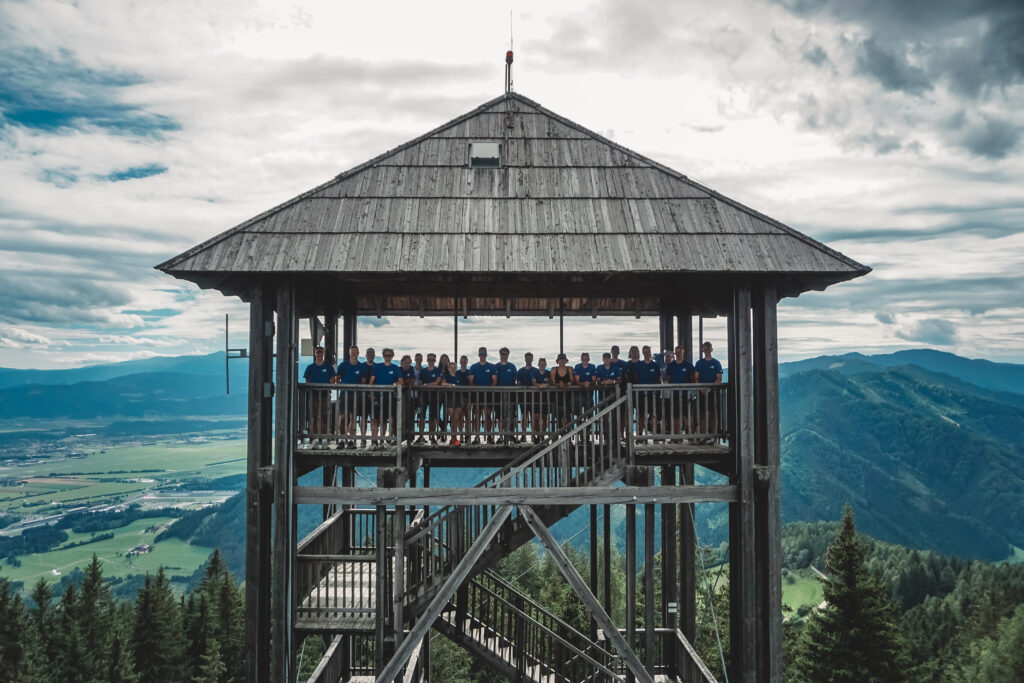
Before the awards ceremony there was a small free window, so we took a joint hike to the top of the nearest mountain to clear our heads. With the crowd you have toiled together with for the last 10 months you could do anything. The mountain top was not left unconquered. The Estonian flag was not left unraised on the stage nor Team Tallinn left uncheered. There were in fact many successes to take along.
We continued to Hungary, but this time we could not make a beach-holiday stop, because the driverless system had to be bolted on. Namely, Hungary was the first competition of the season where we drove both with a driver and driverless. The Hungarian competition went quite smoothly, and we can be satisfied with both the static and the dynamic events. In the design defence the team has never before achieved first place at a competition with such high competition. Certainly one of the proudest achievements of this season. Although for the driverless formula car team these were the first technical inspections with the new car, we passed them before the start of any driving event. The braking test required a couple of attempts, as at first the system tried to start driving a slalom between the cones. A few modifications and a steady straight-line acceleration to 40 km/h followed by sudden braking, nice. Now we can go onto the track with the driverless car. In Hungary we at times had to fight stormy weather, which disturbed both camping at night and the dynamic events. For example, we were chased out of the driverless autocross starting queue because a storm was said to be coming right away. We waited in the pit until it had drizzled for a while and then the event was reopened, 25 minutes before final closing. We got the car to the starting line, but the car could not carry out the correct steering commands. The calculated trajectory looked correct in the log, but the car itself turned towards the cones. The endurance event with a driver took place in the rain, which suited us very well – FEST23's home conditions. We drove the day's best times together with the University of Stuttgart team, and there was tight tussling at the front. On the 16th lap our car went behind a corner and never came out – had the driver driven off? Had something happened to the car? Uncertainty. After a long radio silence the driver's radio call came – everything is fine. In the battery pack there was a bad connection at a measuring point, and to avoid bigger problems the battery management system raised an error message. Again, no problems in the previous 500 km, and the fault came out precisely in the competition's endurance event.
We headed back to Győr to prepare for the next competition. The failed endurance events nagged at us and we definitely wanted to complete one more endurance run before the next competition. As the local team does not have very good testing opportunities, we drove 5 hours to Slovakia to another friendly team, which had booked a track for the next day. The long drive was worth it, we drove through an endurance run without problems, which gave confidence for the next competition in Germany.
The German competition is the largest in Europe, with more than a hundred teams present. This season it was our fourth competition in sequence. In general everything went successfully; in the figure-eight we managed to drive the day's best lap time, and elsewhere we were constantly in podium contention. By the time of the German competition most teams had got their cars working better and offered a fair amount of competition. We managed to break the bad luck that had accompanied us at two competitions, and despite a very uneven track where many formula cars had suspension problems, we managed to finish the endurance event! The emotion was powerful and almost the whole team had tears of joy in their eyes! At the German competition we have never before managed to finish the endurance event! This achievement will be remembered by everyone; at such a high-level competition we can call ourselves one of the best six.
Immediately after the German competition's awards ceremony we set course for Croatia, the season's last competition. The team had not been to the FS Alpe Adria competition before. Despite having four competitions behind us, the most problems in technical inspections came out precisely there. The judges checked all the small details with painful precision. At this competition we were truly in our element. In the static events we were in the finals of both the design defence and the cost report, which is quite a rare phenomenon. In the dynamic events we got 2nd place in acceleration and the figure-eight and, for the first time this year, 3rd place in qualifying. We have not grabbed so many podium places from one competition this season.
On the big scale we can finish on a positive note. The new concept works, the team is prepared for competitions, strong in the dynamic events and one of the best in the static events. This has been brought about by systematic work and dedication over many years and the passing on of knowledge. Design finals at five competitions, three design event wins, two cost report podium places, and all of this within a single season. No such statistics can be shown by Zurich, Munich or any other top European technical university. We are the ones at the top there, from this little Estonia. Proud!
Whereas last season we had a great deal of luck and, despite the car constantly having reliability problems, we miraculously managed to get FEST22 working for the moment of the competition. This season was the exact opposite. We worked intensely to improve reliability and all of last year's faults were fixed. FEST23 had more than 500 test kilometres behind it, during which the car worked almost flawlessly and showed good reliability. In tests the endurance event could always be finished, but at the competitions problems appeared that had never come up before.
This season confirmed that student formula really is a journey to the top, and despite some setbacks, FS Team Tallinn's level is such that the world's best have to watch our leaps of development with fear. The work done here stands out to others as well; job offers were received by team members from Rimac, Volkswagen, Tesla and BMW Motorsport – the whole world is open!
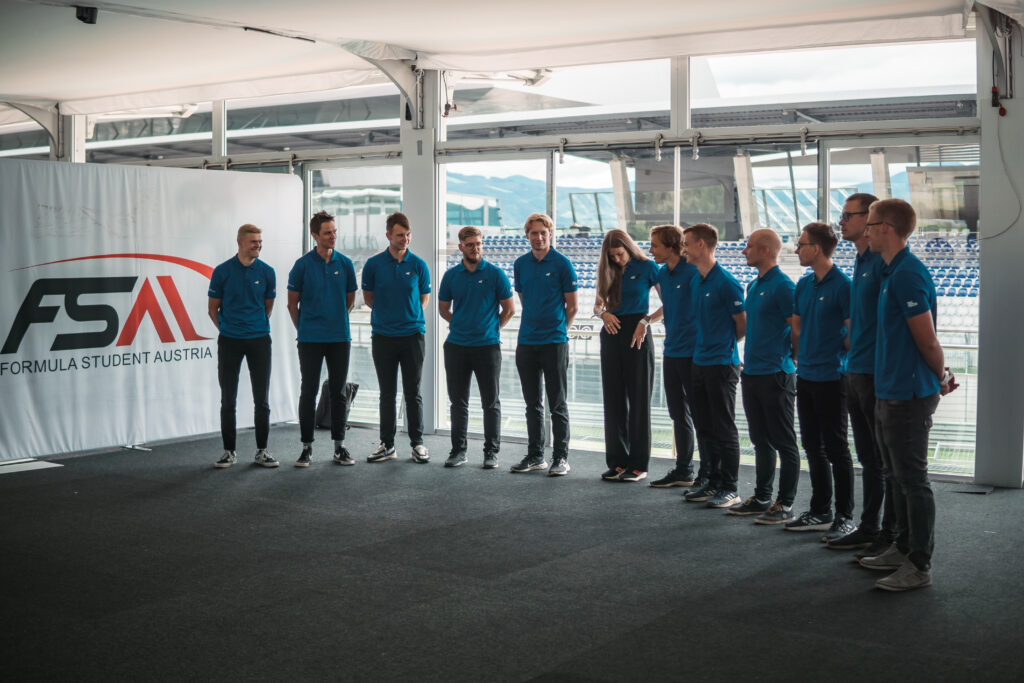
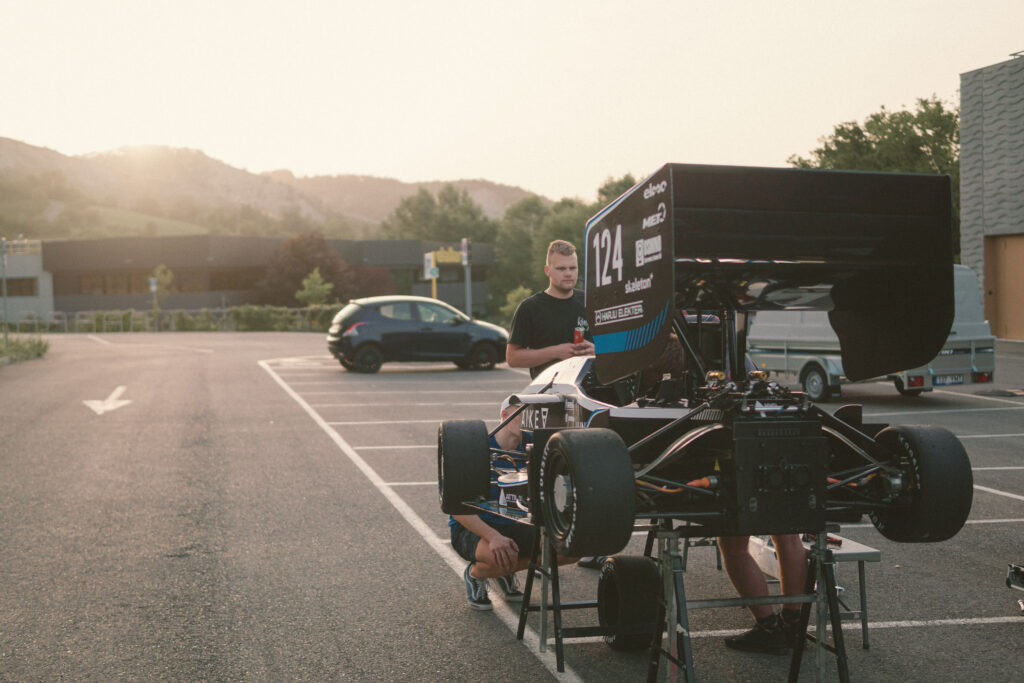
Shares what FS Team Tallinn does and raises awareness of the project – media, social media, events, school visits, finding sponsors, capturing memories, website development and the business plan.